
Selective Fetal Reduction: Managing High-Risk Multiple Pregnancies
Selective fetal reduction is a medical procedure used in certain multiple pregnancies to reduce the number of fetuses in order to improve the chances of survival and health outcomes for the remaining ones. This procedure may be recommended when carrying multiple fetuses poses significant health risks to the mother or the babies.
Multiple pregnancies such as twins, triplets, or higher-order multiples can increase the risk of complications including preterm birth, low birth weight, and pregnancy-related health problems for the mother. Selective fetal reduction aims to lower these risks by carefully reducing the number of fetuses under strict medical supervision.
The procedure is performed by experienced specialists using ultrasound guidance to ensure precision and safety.
Purpose of Selective Fetal Reduction
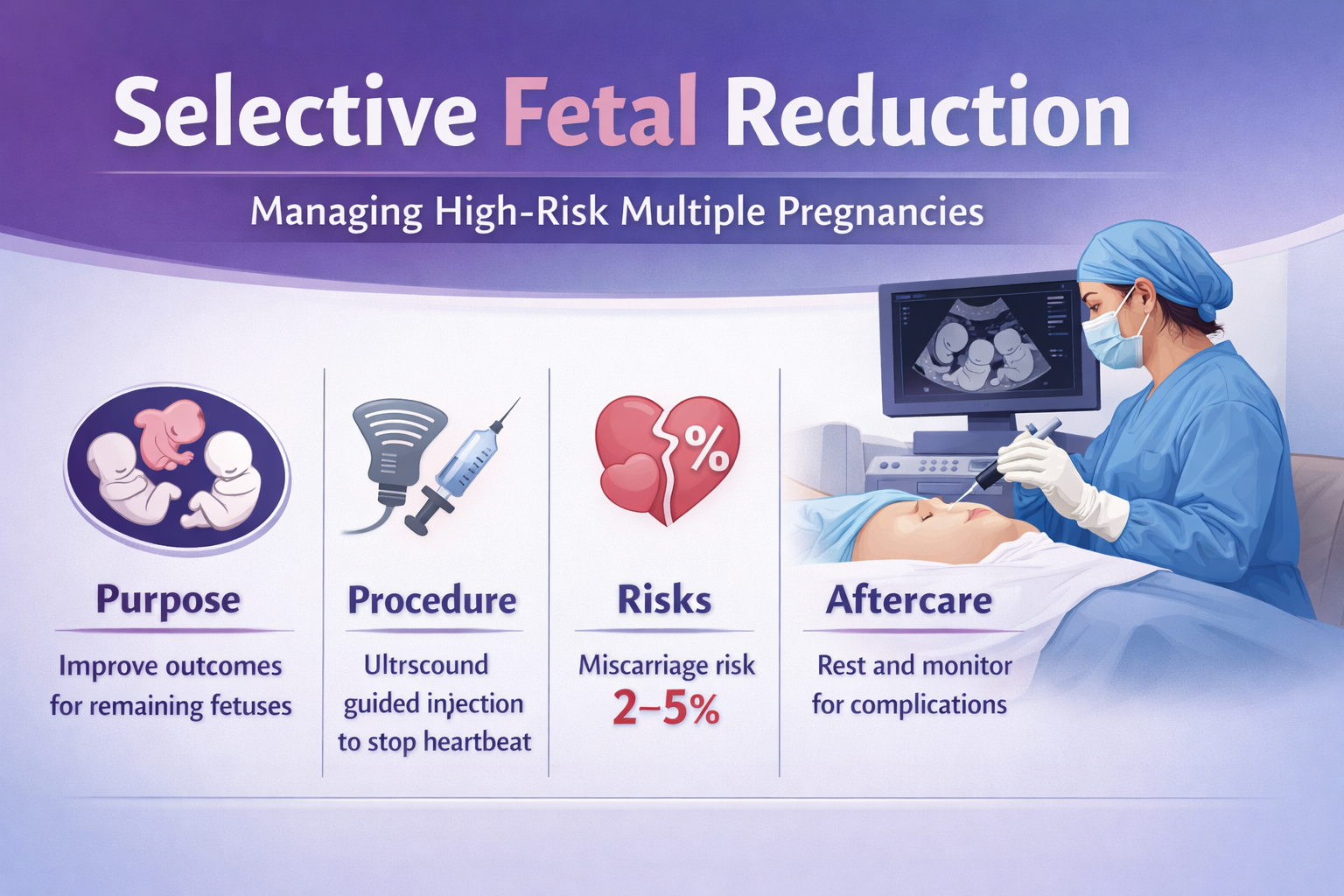
Improved Pregnancy Outcomes: Reducing the number of fetuses may increase the likelihood of healthy development for the remaining babies.
Reduced Risk of Preterm Birth: Multiple pregnancies have a higher chance of premature delivery, and reduction can help decrease this risk.
Maternal Health Protection: It may reduce complications for the mother such as high blood pressure, gestational diabetes, or other pregnancy-related conditions.
How is the Procedure Performed?
Ultrasound Guidance: The procedure is performed under continuous ultrasound monitoring to accurately identify the fetus and surrounding structures.
Injection Procedure: A specialized needle is inserted through the mother's abdomen, and a medication is injected into the selected fetus, usually targeting the heart or umbilical cord to stop the heartbeat.
The procedure is typically performed in a hospital or specialized fetal medicine center.
Risks Associated with Selective Fetal Reduction
Miscarriage Risk: There is a small risk of miscarriage affecting the remaining fetuses, estimated at approximately 2–5%.
Emotional and Ethical Considerations: The decision can be emotionally challenging and should be carefully discussed with healthcare professionals.
After the Procedure
Following the procedure, doctors may recommend rest or reduced physical activity for a short period. Mild discomfort may occur but generally resolves within a few days.
If symptoms such as severe abdominal pain, vaginal bleeding, or uterine contractions occur, it is important to contact your healthcare provider immediately.
Important: Selective fetal reduction is a complex medical decision that involves both medical and emotional considerations. It is essential to have detailed discussions with your healthcare provider to fully understand the potential benefits, risks, and available alternatives before proceeding.