
Enhanced First Trimester Screening (FTS): Advanced Prenatal Risk Assessment
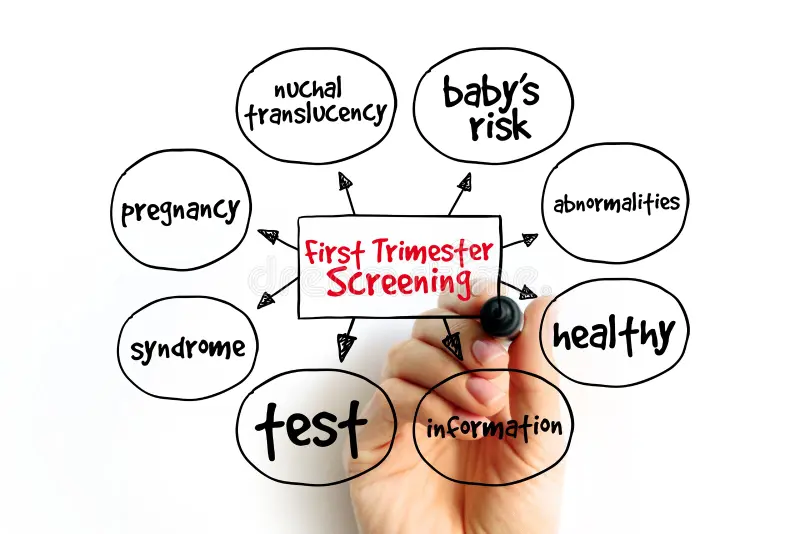
Enhanced First Trimester Screening (FTS) is an advanced prenatal screening test performed during the early stages of pregnancy, usually between 11 and 13 weeks. This test provides a more detailed assessment of the risk of chromosomal abnormalities compared to the traditional double marker test.
The screening combines four important blood markers—Pregnancy Associated Plasma Protein-A (PAPP-A), free beta-human chorionic gonadotropin (free β-hCG), alpha-fetoprotein (AFP), and inhibin A—along with nuchal translucency (NT) measurement from ultrasound and maternal factors such as age.
By evaluating these markers together, Enhanced FTS improves the accuracy of detecting conditions such as Down syndrome (Trisomy 21), Trisomy 18, and open neural tube defects like spina bifida. The results help doctors identify pregnancies that may require closer monitoring or further diagnostic testing.
How Enhanced First Trimester Screening Works
Blood Marker Analysis: A blood sample is collected from the mother to measure levels of PAPP-A, free β-hCG, AFP, and inhibin A.
Ultrasound Assessment: An ultrasound scan measures the nuchal translucency (NT), which is the fluid-filled space at the back of the baby’s neck.
Risk Calculation: The marker levels, ultrasound measurements, and maternal age are combined to estimate the risk of chromosomal abnormalities and certain pregnancy complications.
Conditions Evaluated with Enhanced FTS
Chromosomal Abnormalities: Helps assess the risk of genetic conditions such as Down syndrome and Trisomy 18.
Neural Tube Defects: Screening may provide early indications of conditions such as spina bifida.
Pre-Eclampsia Risk: The screening can help identify women who may be at higher risk of developing pre-eclampsia, a condition characterized by high blood pressure during pregnancy.
Fetal Growth Restriction: It may also provide clues about the risk of the baby being smaller than expected for the gestational age.
Advantages of Enhanced First Trimester Screening
Higher Detection Accuracy: The inclusion of four serum markers and NT measurement improves the sensitivity compared to the standard double marker test.
Early Risk Identification: Detecting possible concerns early in pregnancy allows doctors to plan appropriate monitoring and care.
Better Pregnancy Management: Early risk assessment enables healthcare providers to take preventive measures and guide parents about further testing if required.
Important: Enhanced FTS is a screening test, not a diagnostic test. If the results indicate an increased risk, your doctor may recommend further tests such as chorionic villus sampling (CVS) or amniocentesis for confirmation.