
Double Marker Test: First Trimester Prenatal Screening
The double marker test is a prenatal blood test performed during the first trimester of pregnancy, usually between 9 and 13 weeks. This screening test helps evaluate the risk of certain chromosomal abnormalities in the baby, such as Down syndrome (Trisomy 21) and Trisomy 18.
The test measures two important markers in the mother's blood: PAPP-A (Pregnancy Associated Plasma Protein-A) and beta-hCG (human chorionic gonadotropin). These values are analyzed together with factors such as maternal age and ultrasound findings to estimate the risk of chromosomal conditions.
Although the double marker test does not provide a definite diagnosis, it helps identify pregnancies that may require further evaluation or diagnostic testing.
How Does the Double Marker Test Work?
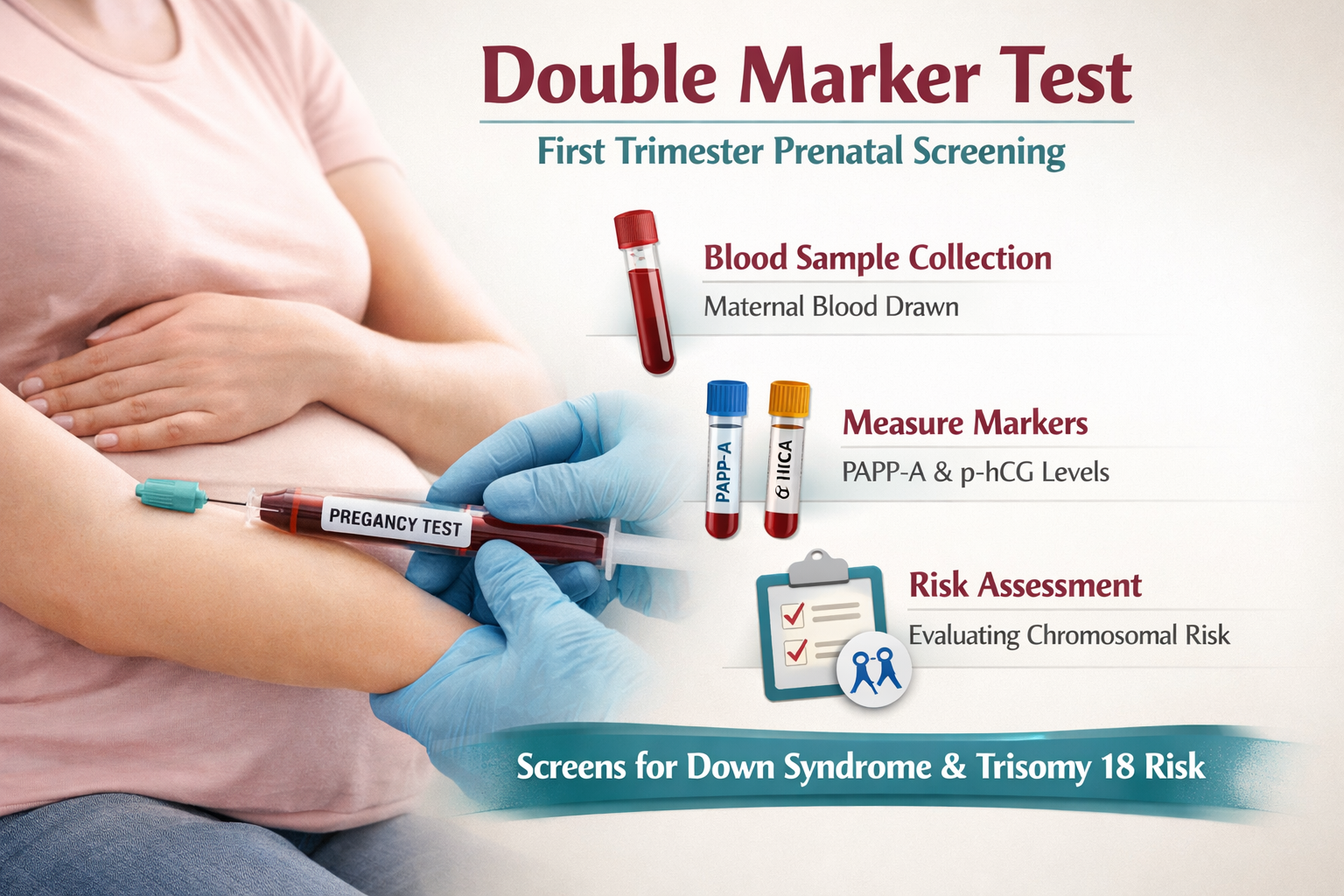
Blood Sample Collection: A small blood sample is taken from the pregnant mother, usually from a vein in the arm.
Measurement of Pregnancy Markers: The laboratory measures the levels of beta-hCG and PAPP-A present in the blood.
Risk Calculation: The test results are combined with maternal age, gestational age, and sometimes ultrasound findings to estimate the risk of chromosomal abnormalities.
When is the Double Marker Test Performed?
The double marker test is typically performed between 10 and 13 weeks of pregnancy, often alongside the NT/NB scan for more accurate risk assessment.
Why is the Double Marker Test Important?
Early Risk Screening: Helps identify pregnancies with a higher risk of chromosomal abnormalities during early pregnancy.
Guidance for Further Testing: If the screening indicates increased risk, doctors may recommend additional tests such as chorionic villus sampling (CVS) or amniocentesis.
Better Pregnancy Monitoring: Early identification of possible risks allows healthcare providers to plan further evaluation and monitoring.
Important: The double marker test is a screening test, not a diagnostic test. A positive screening result does not necessarily mean the baby has a chromosomal abnormality. Your doctor will explain the results and guide you regarding any further testing if required.