
NIPT: Non-Invasive Prenatal Testing for Chromosomal Screening
Non-invasive prenatal testing (NIPT) is an advanced blood test used during early pregnancy to screen for certain chromosomal conditions in the baby. The test analyzes cell-free fetal DNA (cffDNA) circulating in the mother's blood to estimate the risk of genetic abnormalities.
NIPT can usually be performed as early as the 10th week of pregnancy. It is known for its high accuracy, particularly in detecting Down syndrome (Trisomy 21), with detection rates exceeding 99%. The test can also identify risks for Trisomy 18, Trisomy 13, and certain sex chromosome abnormalities.
Although NIPT is a highly reliable screening tool, it is not a diagnostic test. If results indicate a higher risk, doctors may recommend confirmatory tests such as chorionic villus sampling (CVS) or amniocentesis.
How Does NIPT Work?
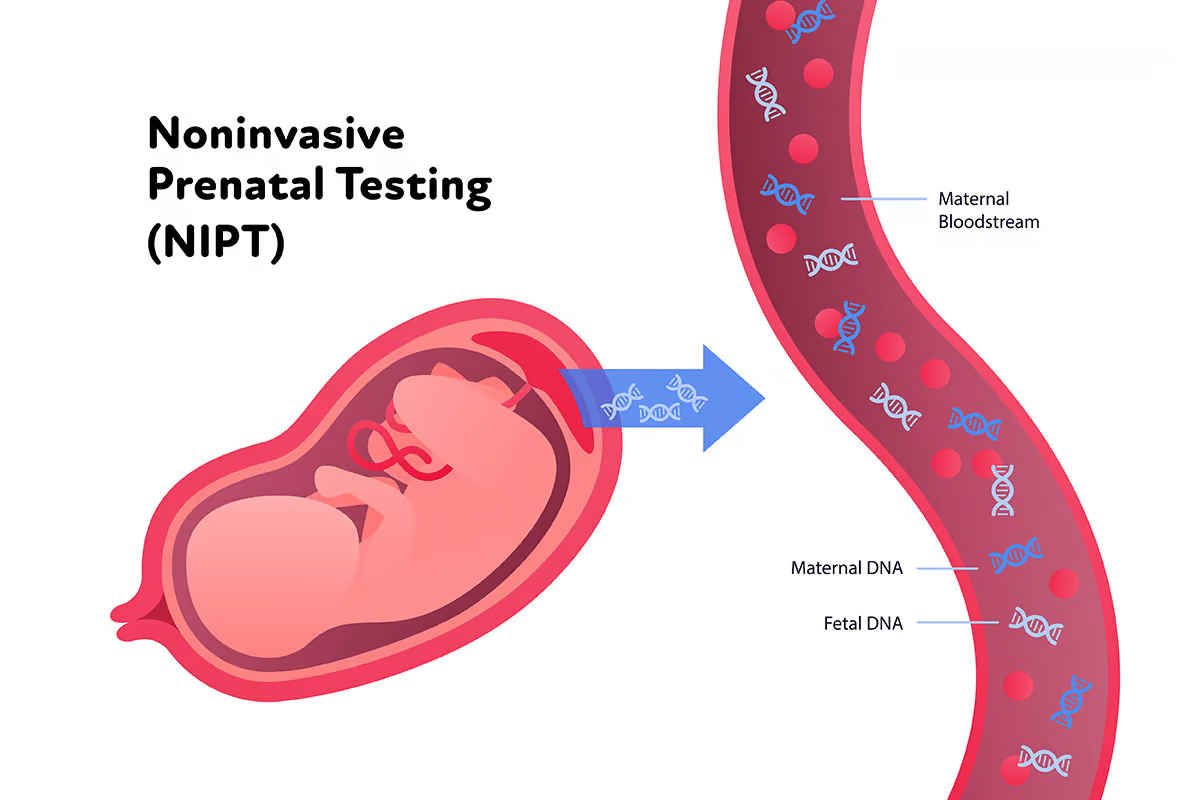
Blood Sample Collection: A small blood sample is taken from the pregnant mother, typically from a vein in the arm.
Analysis of Cell-Free DNA: The blood sample contains small fragments of fetal DNA released from the placenta. These DNA fragments are analyzed in a specialized laboratory.
Risk Assessment: Advanced genetic analysis determines whether there is an increased risk of specific chromosomal abnormalities.
When is NIPT Performed?
NIPT is generally recommended from the 10th week of pregnancy onward. It may be advised for women with higher-risk pregnancies, such as those with advanced maternal age, abnormal screening results, or a family history of genetic conditions.
Conditions Screened by NIPT
Down Syndrome (Trisomy 21): The most common chromosomal condition detected by NIPT.
Trisomy 18: A genetic condition that can cause severe developmental abnormalities.
Trisomy 13: A rare chromosomal disorder affecting multiple organ systems.
Sex Chromosome Abnormalities: Certain conditions involving the X and Y chromosomes may also be screened.
Benefits of NIPT
Non-Invasive: The test requires only a blood sample and does not involve procedures that could harm the baby.
High Accuracy: NIPT provides very high detection rates for common chromosomal abnormalities, especially Down syndrome.
Early Risk Information: The test can be performed early in pregnancy, helping parents and doctors make informed decisions about further care or testing.
Important: NIPT is a screening test, not a definitive diagnosis. If the screening result indicates a higher risk, further diagnostic tests such as CVS or amniocentesis may be recommended.