
Second Trimester Quadruple Marker Test (Quad Screen)
The second trimester quadruple marker test, commonly known as the quadruple screen or quad test, is a prenatal blood screening performed during the 15th to 20th week of pregnancy. This test helps estimate the risk of certain chromosomal abnormalities and developmental conditions in the baby.
The quad screen evaluates the levels of four substances in the mother's blood: alpha-fetoprotein (AFP), human chorionic gonadotropin (hCG), estriol, and inhibin-A. By analyzing these markers together with maternal age and gestational age, doctors can estimate the likelihood of conditions such as Down syndrome (Trisomy 21), Trisomy 18, and neural tube defects.
Although the quadruple marker test is a helpful screening tool, it does not confirm a diagnosis. Instead, it identifies pregnancies that may benefit from further testing or closer monitoring.
When is the Quadruple Marker Test Performed?
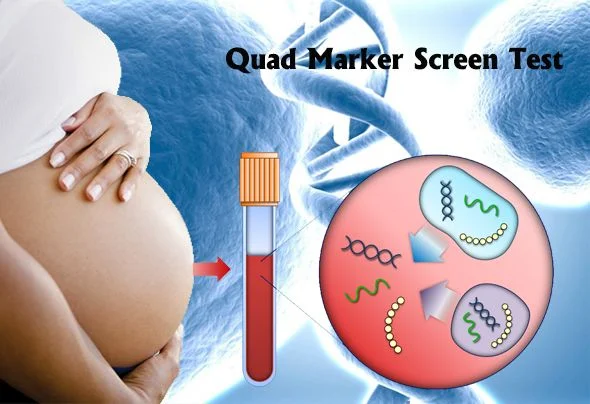
The test is generally recommended between 15 and 20 weeks of pregnancy, with the most accurate results often obtained around the 16th to 18th week.
How Does the Quadruple Marker Test Work?
Blood Sample Collection: A small blood sample is taken from the pregnant mother, usually from a vein in the arm.
Marker Measurement: The laboratory analyzes the levels of four biomarkers — AFP, hCG, estriol, and inhibin-A — present in the blood.
Risk Evaluation: The results are combined with maternal age, gestational age, and other clinical information to estimate the risk of chromosomal abnormalities and neural tube defects.
What Conditions Can the Quadruple Screen Detect?
Down Syndrome (Trisomy 21): A genetic condition caused by an extra chromosome 21.
Trisomy 18: A rare chromosomal condition that can affect the development of multiple organs.
Neural Tube Defects: Conditions such as spina bifida that affect the development of the brain or spinal cord.
Important: The quadruple marker test is a screening test with moderate sensitivity (around 80% for detecting Down syndrome). A high-risk result does not confirm the presence of a condition. If the results indicate increased risk, your doctor may recommend further diagnostic tests such as amniocentesis for confirmation.