
Chorionic Villus Sampling (CVS): Early Prenatal Diagnostic Test
Chorionic Villus Sampling (CVS) is an invasive prenatal diagnostic procedure used to detect genetic and chromosomal abnormalities in a developing baby. The test is usually performed between 10 and 13 weeks of pregnancy, allowing early detection of certain inherited conditions.
During CVS, a small sample of placental tissue called chorionic villi is collected. These cells contain the same genetic material as the fetus and can be analyzed in a laboratory to identify chromosomal abnormalities or inherited disorders.
The procedure is performed under ultrasound guidance to ensure safety and accuracy. CVS is typically recommended when there is an increased risk of genetic conditions based on family history, maternal age, or abnormal prenatal screening results.
When is CVS Performed?
Early Pregnancy Screening: CVS is usually performed between 10 and 13 weeks of pregnancy, allowing earlier diagnosis compared to some other prenatal tests.
High-Risk Pregnancies: Doctors may recommend CVS if screening tests show an increased risk of genetic abnormalities or if there is a family history of inherited diseases.
How is CVS Performed?
Transabdominal Method: A thin needle is inserted through the abdomen into the placenta to collect a small tissue sample.
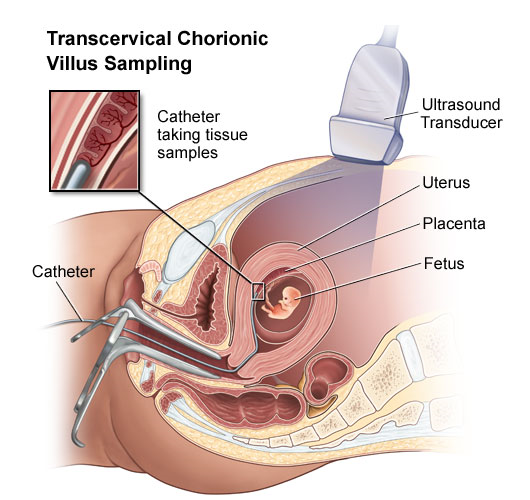
Transcervical Method: In some cases, a thin tube is gently inserted through the cervix to reach the placenta and obtain the sample.
Both procedures are performed under ultrasound guidance to ensure precise placement and minimize risk.
What Information Does CVS Provide?
Chromosomal Abnormalities: CVS can detect conditions such as Down syndrome (Trisomy 21), Trisomy 18, and Trisomy 13.
Genetic Disorders: The test can identify inherited diseases such as cystic fibrosis, sickle cell anemia, and certain metabolic disorders.
Fetal Sex Determination: In some cases, CVS can determine the sex of the fetus if medically relevant for diagnosing sex-linked genetic conditions.
Risks Associated with CVS
Miscarriage Risk: CVS carries a small risk of pregnancy loss, typically estimated at about 1 in 100 cases.
Infection: There is a very small risk of infection following the procedure.
Bleeding or Cramping: Mild cramping or spotting may occur for a short period after the procedure.
What to Expect After the Procedure
After CVS, doctors usually recommend light activity for 24–48 hours. Mild cramping or spotting can occur and is generally temporary.
If symptoms such as severe abdominal pain, heavy bleeding, fever, or signs of preterm labor occur, contact your healthcare provider immediately.
Important: CVS is an invasive diagnostic test and is generally recommended for women at higher risk of genetic conditions. Discuss the benefits and potential risks with your doctor before making a decision.